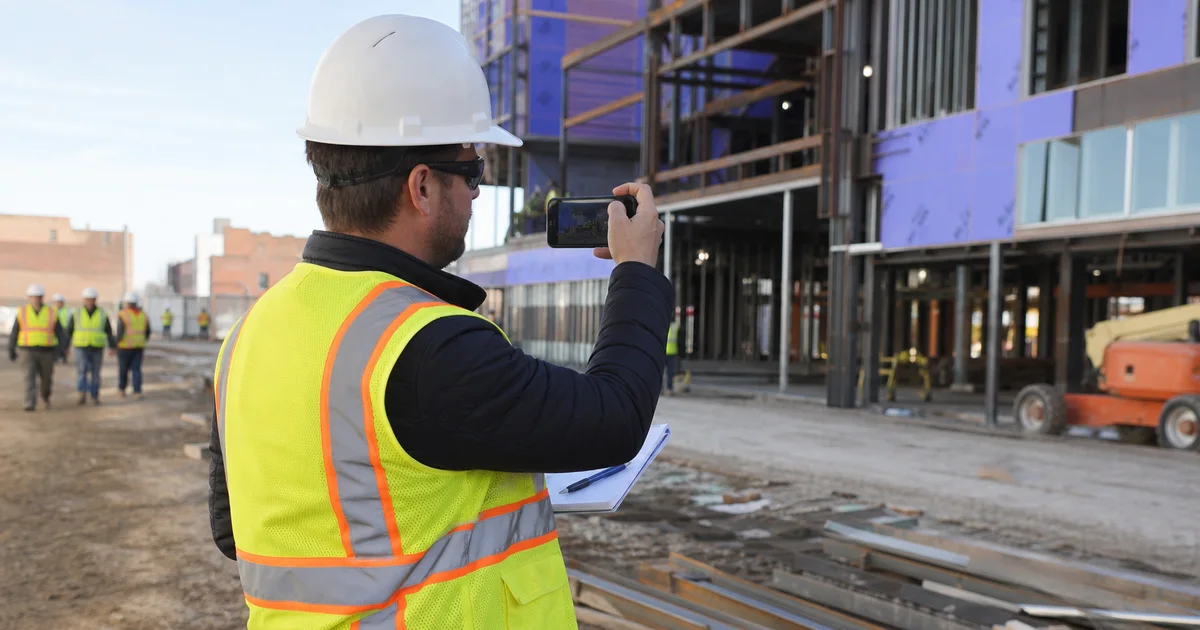
Prepare from the bid documents
Review drawings, specifications, logistics requirements, owner instructions, and known questions before visiting. Create an observation list covering access, laydown, utilities, existing conditions, occupied areas, work hours, protection, phasing, demolition, and interfaces.
Follow site rules and obtain permission before recording images. Use the site access estimating plan to identify dimensions, routes, permits, and delivery questions that need field evidence.
Record facts and limits
Give each note a location, time, observer, description, photo reference where permitted, and related document. Separate what was seen from an interpretation. Note concealed or inaccessible areas and avoid claiming that a walk-through proves conditions that were not visible.
OSHA construction resources can inform general awareness, but the visit is not a safety certification or design review. Follow the controlling site plan and route technical concerns to qualified personnel.
Convert observations into estimate actions
Link each material observation to quantities, crew production, equipment, temporary work, subcontract scope, schedule, allowance, qualification, or clarification. Assign an owner and due date. If an observation conflicts with issued documents, preserve the conflict and seek a formal answer.
Reconcile the result with the estimating handoff checklist. Before bid release, confirm that every high-impact note is resolved, priced, or disclosed as an open assumption.
| Field | Example purpose |
|---|---|
| Location | Tie observation to project area |
| Evidence | Note, photo, measurement, document |
| Estimate effect | Quantity, productivity, logistics, scope |
| Action | Owner, deadline, resolution |